



Q-Park Frontenpark: built to serve a developing city
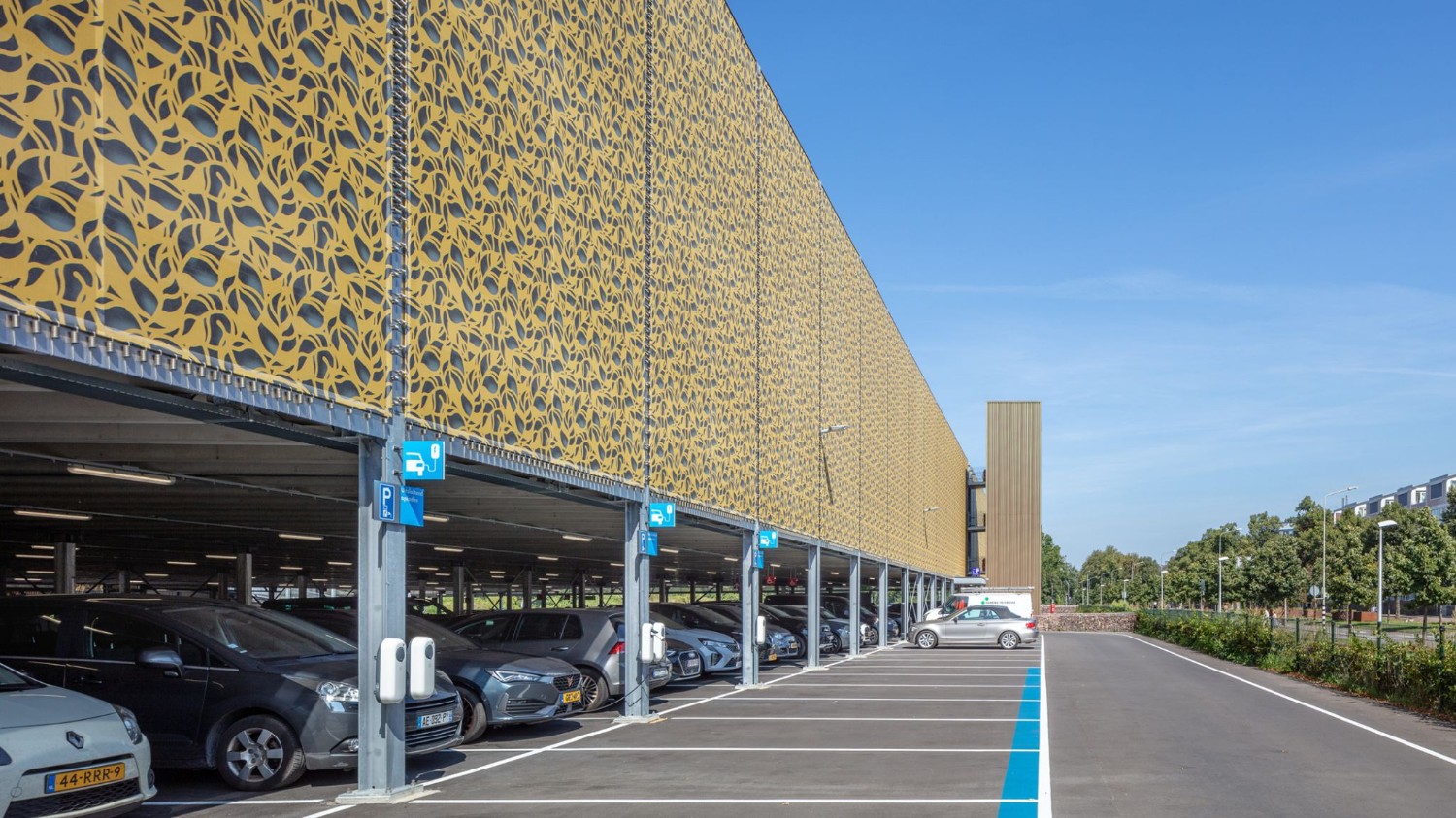
3D printed facade and EV charging points
In a seven-month building project completed in June 2024, Q-Park Frontenpark gained a temporary and recyclable multi-storey car park and became a mobility hub. With 1,308 spaces, Q-Park Frontenpark is now the largest parking facility in Maastricht. The strategic location, just off the city ring road, means this enlarged parking facility is also ideal for logistics services.
Maastricht municipality wanted to temporarily expand parking capacity in the area while developments continue to rejuvenate the adjacent Sphinx neighbourhood. These plans include constructing housing with underground parking on the site of the nearby Sphinx open-air car park. When this development is complete, the temporary structure at Q-Park Frontenpark may easily be dismantled.

Q-Park Frontenpark (outlined in red) temporarily expanded to serve plans for the Sphinx site (outlined in green) redevelopment.
History and heritage
Frontenpark is a public nature park located on the site of ancient fortifications at the north-west edge of the city. Until the late 19th century, the city was always walled and fortified. Many ramparts and city gates were demolished to make way for expansion.
Early in the 20th century, the area became home to various industries, the most notable being the Sphinx ceramics and sanitary ware factory. At the same time, the adjacent Frontenpark site became a hub for transport over land and water, with a complete railway yard and station at Frontensingel. Parts of the ancient fortifications, railway tracks and industrial past are still clearly visible in the area where Q-Park Frontenpark is now located.
Flora and fauna
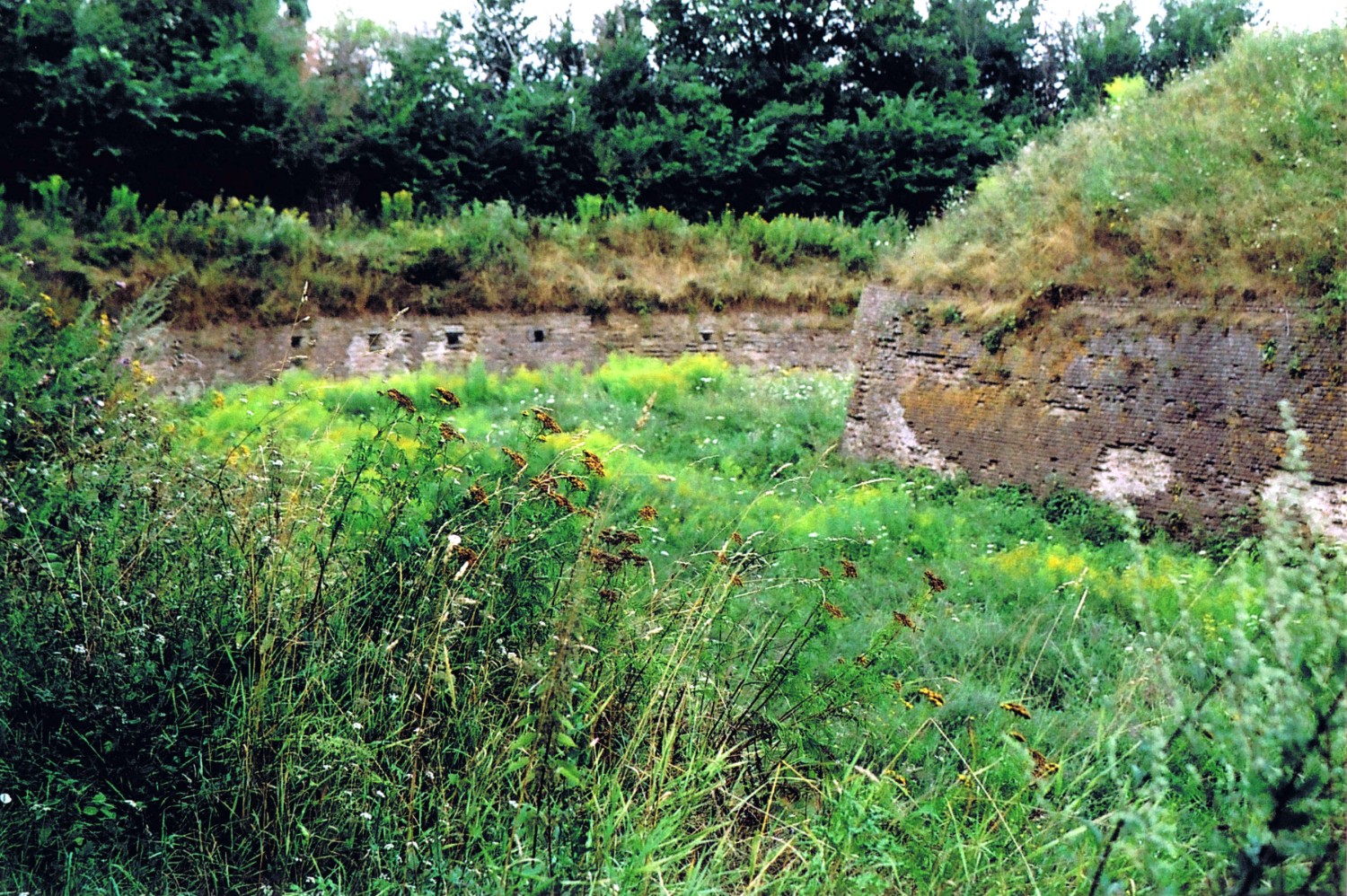
Photo: Mark Ahsmann, CC BY-SA 3.0, via Wikimedia Commons
We designed the parking facility with Frontenpark’s unique and diverse flora and fauna in mind. The 20-hectare park is an ideal natural habitat, for a variety of flora and fauna types, with its numerous nooks and crannies among the ramparts, casemates, some underground, and stretches of disused railway track. So, it is no surprise that native plants and protected animal species thrive in this environment, and we at Q-Park want to conserve this habitat too. Extensive research has been conducted into the habitat of the Common Wall Lizard (Podarcis muralis), which is unique to the Netherlands and roosts on the ramparts behind the car park.
Sustainable design considerations
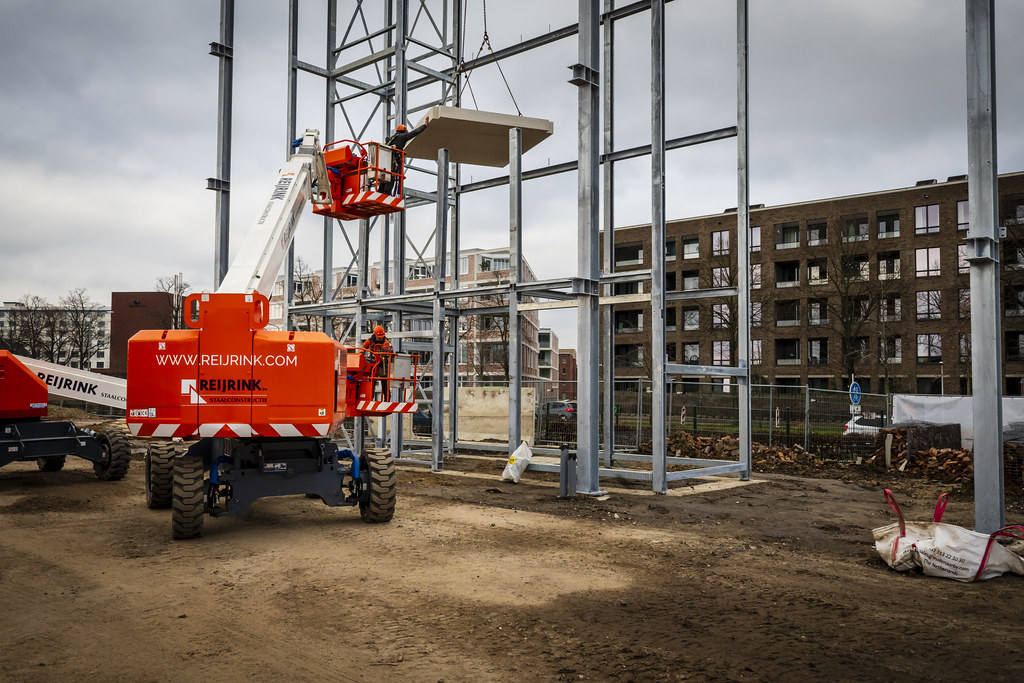
Assembling the prefabricated steel elements
Circularity and sustainability have been key considerations in this project. We used European Parking Association ESPA quality standards in the tendering and construction processes. Our vision was a modular structure designed for circularity and full recyclability. This not only shortend the construction time, but it also means that at the end of its life cycle, the steel structure can be easily dismantled and the materials be reused or recycled.
We use large spans to minimise the number of columns on the parking decks. To facilitate route around the car park, we have placed the ramps at the outside. The open structure and 3D-printed cladding provide natural ventilation. Furthermore, the cladding provides a pleasant backdrop for nearby residents.
We have also ensured that the temporary structure includes our quality in parking characteristics such as:
Coated floors
LED lighting and motion sensors
2.5 m wide parking bays to accommodate modern vehicles
Recognisable signage:
red for motorists
green for pedestrians
lightblue for EV charging.

The parking facility has subsequently received the ESPA GOLD award for off-street parking.
As the grid capacity available is insufficient to power the parking facility's lighting, ventilation, and equipment systems as well as EV charging points, we have installed a creative energy management system to ensure sufficient energy for all needs. This includes:
200 solar panels on the upper parking deck
60 kW battery storage
Energy management system to optimise power use
Smart lighting with sensors.
During construction, we prepared the EV charging infrastructure for future expansion. In addition, the innovative 3D-printed facade and solar-panel carport help minimise the parking facility's carbon footprint.
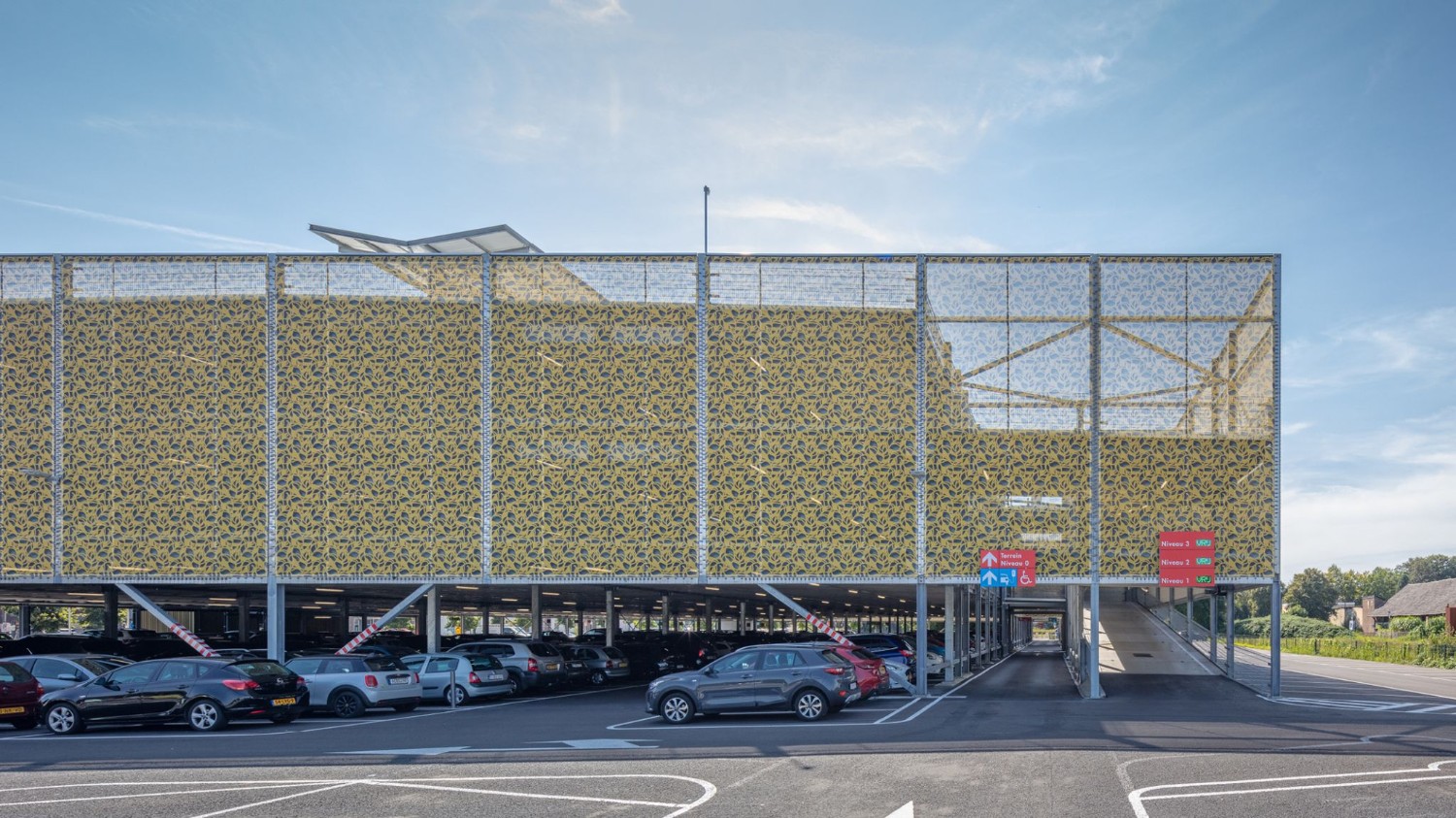
Note the solar-panel carport on the upper deck
Mobility hub functions
As Q-Park Frontenpark is located at the edge of the city it contributes to Maastricht's zero-emission zone and plans for selective motorised access to the city centre. To facilitate urban logistics services and transhipment, the ground floor has a flat ceiling height of 4 metres so it can accommodate light electric freight vehicles.
Q-Park Frontenpark is also convenient for customers visiting Maastricht for shopping and the many tourist attractions. There is a lift, 13 parking spaces for people with reduced mobility (PRMs) and 6 EV charging points.
The city centre is about 10 minutes-walk away, buses stop near the car park entrance and shared bicycles are available from two partners.